LOVE, LOSS, AND LEGACY: A FAMILY PORTRAIT
Family portraits are often thought of as examples of status, particularly in the seventeenth century. However, the finest examples reveal something far more personal. In seventeenth century Holland, these paintings became visual biographies of a family, capturing not only their appearance but also their lives, relationships, and the hopes, dreams, and fears they held for the future.
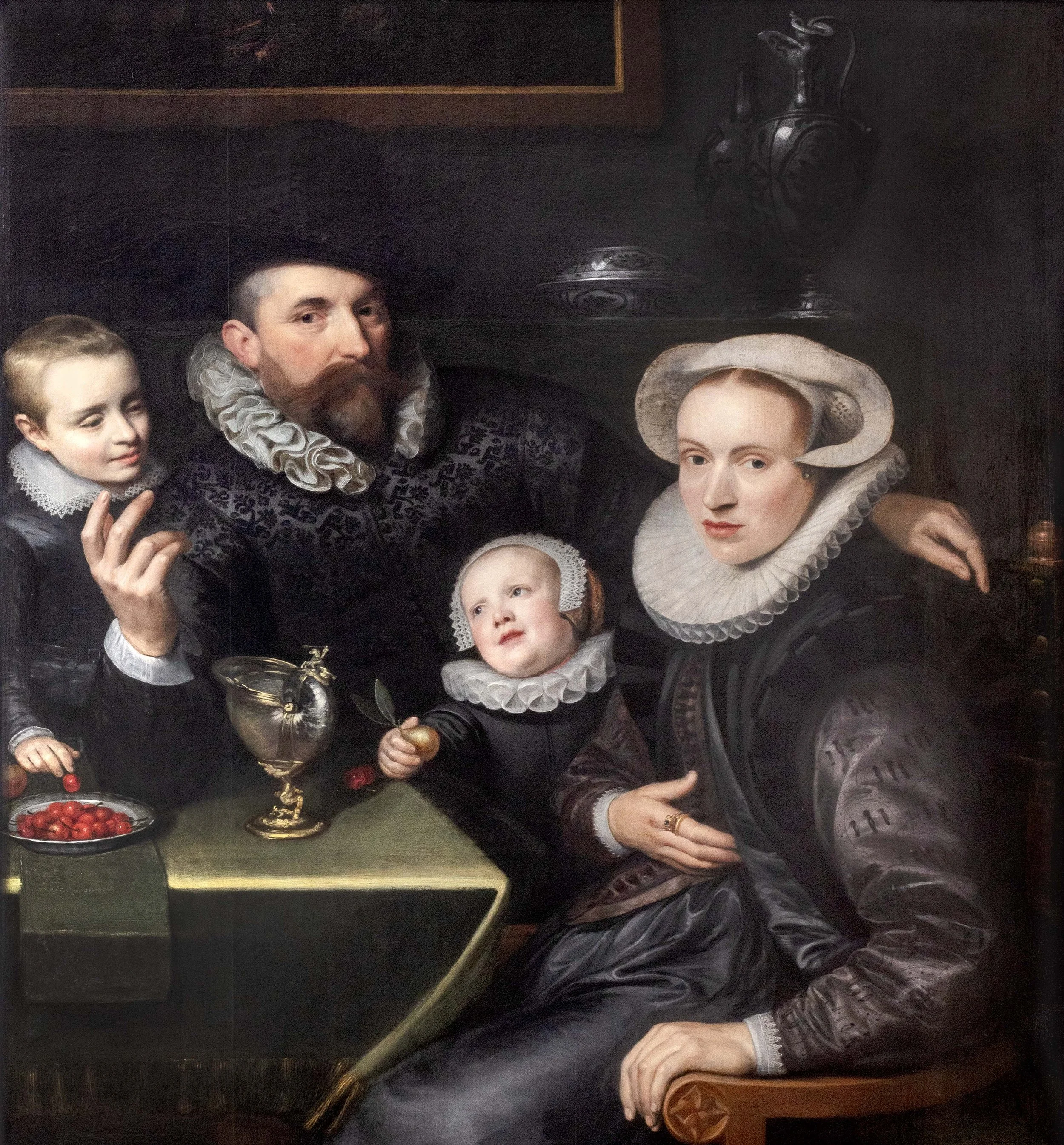
The anonymous Portrait of a Family Seated at a Table from 1608 is remarkable for its warmth and intimacy. At first glance, the painting is a clear message of prosperity. The richly furnished interior and fashionable attire signal a household of considerable means. Yet these symbols of wealth are not the main attraction. Instead, the artist focuses on the relationships between the sitters, creating an image that feels unusually warm for such an early family portrait. The father rests his arm casually around his wife, a gesture of affection rarely seen in portraits of this date, while the children exchange tender glances that draw the viewer into their private world. Symbolic fruits signal the family's hopes and aspirations: cherries allude to prosperity and fruitfulness, while the pear held by the young girl was associated with love and harmony. What emerges is not simply a display of social standing, but a celebration of familial bonds. More than four centuries later, the painting's sense of closeness and genuine affection remains strikingly modern, reminding us that beneath the formal setting were real people bound together by love.
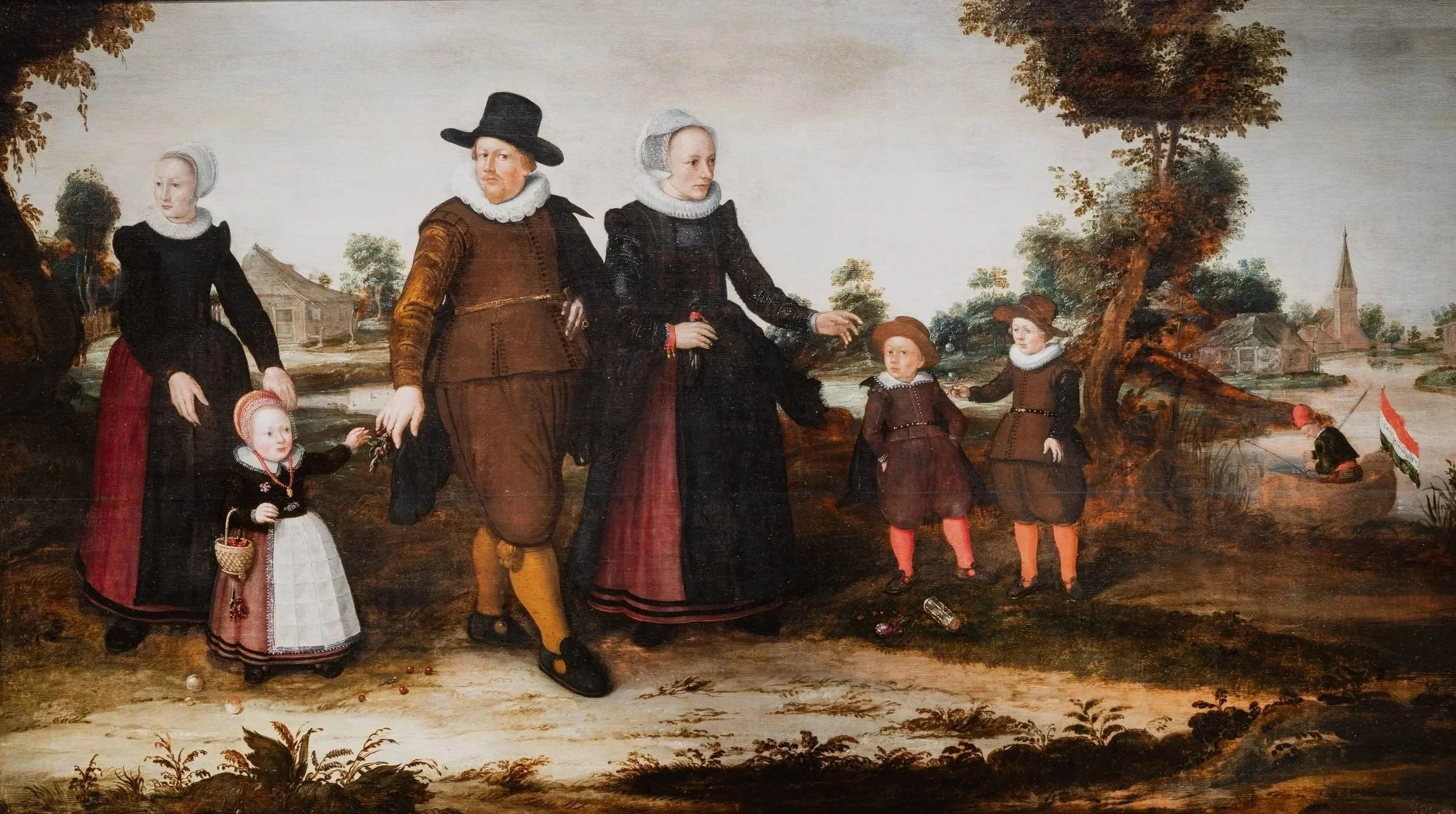
Jan Siewertz Kolm's 1624 portrait of his own family takes us even deeper into private life. At first glance, it appears to be a cheerful family outing in the countryside. The artist strides confidently forward beside his wife, while their children gather around them in a scene filled with warmth. Yet beneath this picturesque image of family happiness lies a story of loss. One of the children, the young Siewert, had already died before reaching his fifth birthday, but Kolm chose to include him among the living. Rather than hiding his grief, the artist weaves it into the family narrative. Siewert stands quietly within the group, marked by subtle symbols of mortality: an overturned hourglass, a discarded rose, and scattered petals at his feet. His older brother reaches toward him while blowing soap bubbles from a shell, invoking the familiar Dutch idea that life is as fragile and fleeting as a bubble. The balance of sorrow and resilience is fundamental to this painting. Cherries again symbolize hopes for prosperity and future happiness, while Kolm's wife holds keys, a symbol of stability and continuity. The painting becomes both a celebration and a memorial—a record of a family carrying on despite heartbreak.
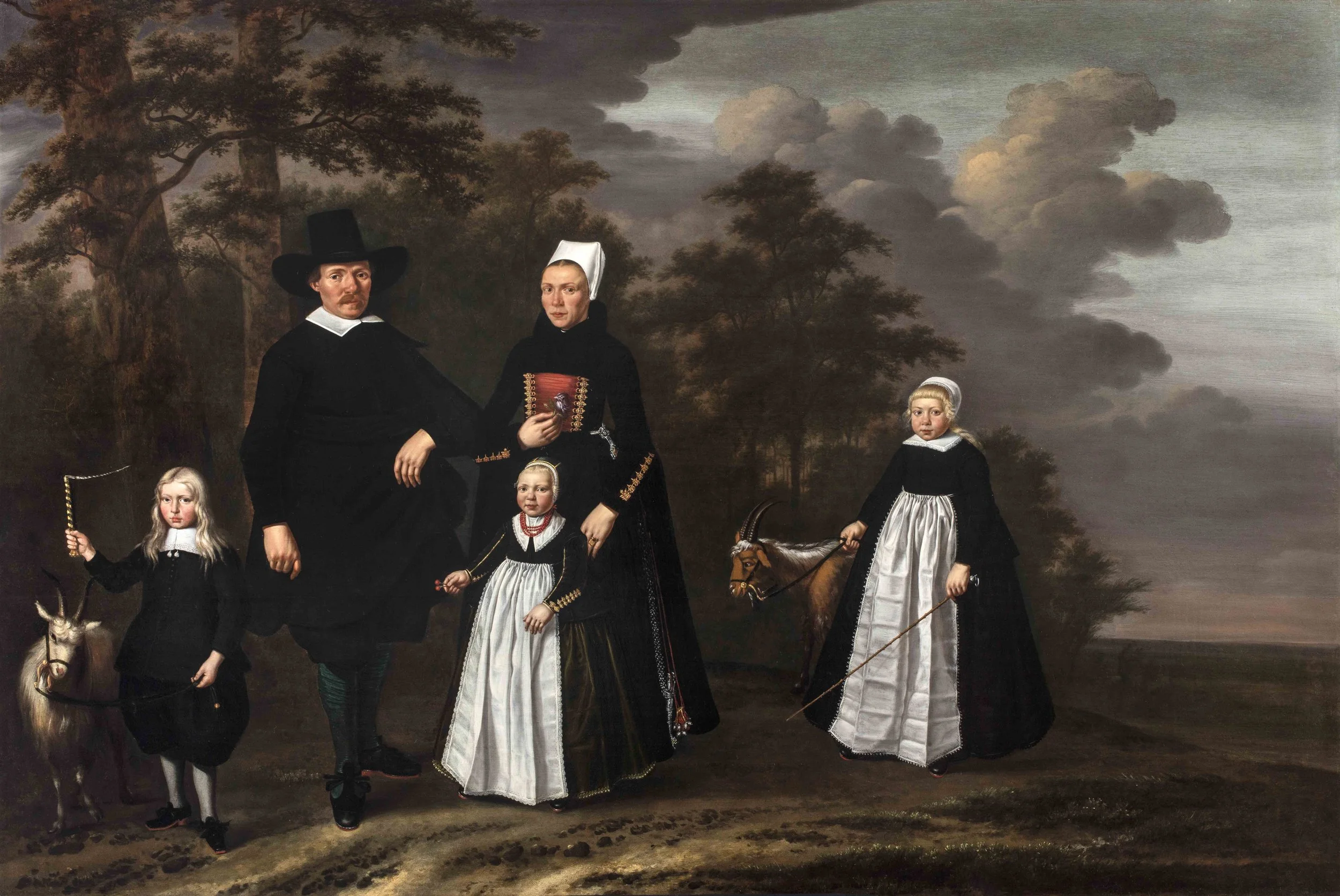
By the time Herman Meindertsz. Doncker painted An Enkhuizen Family Group with Two Goats in a Wooded Landscape around 1650, the family portrait had become a stage for projecting both social status and moral ideals. Rather than depicting the family within the home, Doncker places them in an idealized countryside, strolling through a peaceful landscape that evokes prosperity, refinement, and harmony. The parents stand at the center of the composition, presenting themselves as responsible guardians of both household and family, while their children embody hopes for the future. Once again, cherries held by the young daughter symbolize prosperity and a fruitful life. The two goats, meanwhile, carry a more cautionary message. Although they may have been cherished pets, goats were also associated with temptation and unruly passions, serving as reminders that virtue and self-control must be cultivated from an early age. The painting is about more than appearances. It offers a vision of the family as they wished to be seen, with their hopes and aspirations for their children laid bare for the world to see.
What unites these three portraits is their humanity. They are not merely images of successful families, nor simply records of wealth, fashion, and social position. They are portraits of love, memory, ambition, and endurance. Each painting preserves a different aspect of family life: the tenderness of everyday affection, the pain of loss, and the hope invested in the next generation. Long after the names of many sitters have faded from history, their emotions remain instantly recognizable. These works still speak to us because they capture something that has not changed: the desire to hold close the people we love, to remember those we have lost, and to imagine a better future for those who come after us. In that sense, these portraits continue to do exactly what their makers intended: keep a family's story alive.
24 June 2026
Click here to Read More about the Anonymous Master, Portrait of a Family
Click here to Read More about the Jan Siewertz Kolm
Click here to Read More about the Herman Meindertsz. Doncker